
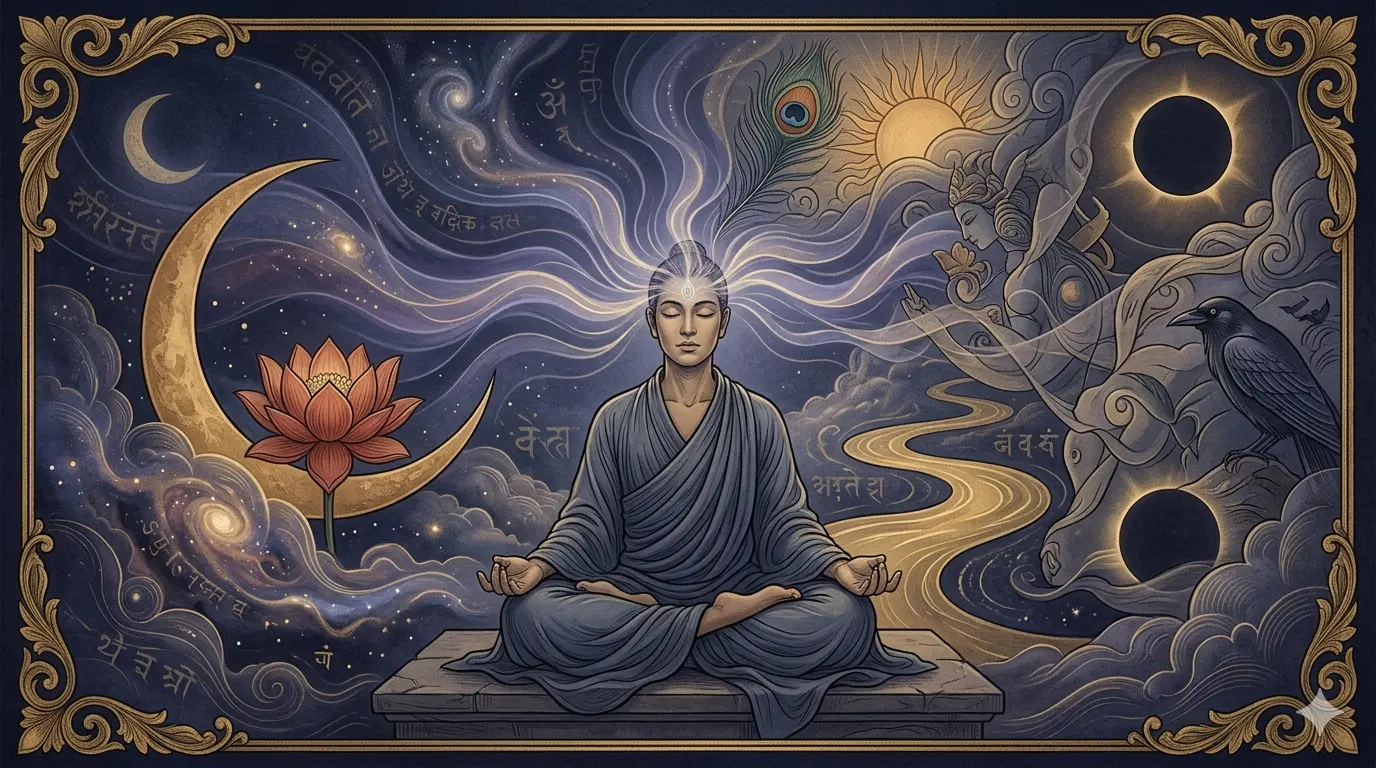
Dreams and the Condition of the Inner Self
In the classical study of Swapna Shastra, a dream is never analyzed as an isolated, random mental event. Instead, ancient Vedic wisdom dictates that the true spiritual validity, clarity, and prophetic weight of a dream (Svapna) are directly mirrors of the dreamer's internal state. The human mind acts as a lens; if the lens is distorted by physical illness or mental unrest, the dream's message becomes clouded.
According to the Puranas and classical Upanishadic thought, divine or prophetic visions require a specific foundation. They manifest almost exclusively when an individual's physical body, mental focus, and energetic currents remain harmonious, undisrupted, and pure.
The Role of Mental Focus and Physical Balance
A tranquil, concentrated intellect has always been recognized in Vedic psychology as a prerequisite for higher perception. Physical well-being holds equal importance. Classical texts define a healthy individual as one whose inner constitutional elements—the bodily humors—exist in absolute equilibrium.
When mental steadiness joins with physical health, dreams born of sincere prayer, meditation, or deep spiritual contemplation offer unmistakable, razor-sharp glimpses of future timelines. Therefore, authentic, divinely inspired dreams are not common, everyday occurrences available to everyone. They are sacred insights reserved for those whose daily life, diet, and consciousness remain disciplined, balanced, and spiritually receptive.
The 9 Scriptural Causes Behind Dreams
Vedic sages identified nine distinct psychological and spiritual roots behind our nightly visions. Understanding these sources allows a seeker to separate meaningless background brain chatter from true, prophetic omens.
1. Dreams Born from What Has Been Heard (Shruta)
These dreams originate from conversations, music, scriptures, or casual phrases heard during waking hours. The subconscious mind simply catalogs these external auditory impressions and replays them during sleep.
2. Dreams Rooted in Waking Experience (Anubhutam)
Daily interactions, tasks, and emotional exchanges leave deep grooves in our psyche. These memories continue to process internally while the body rests, manifesting as direct or slightly altered replays of recent events.
3. Dreams Shaped by Visual Sight (Chintitam)
Images, landscapes, media, or striking events witnessed visually during the day leave strong impressions. The mind preserves these visual stimuli, reconfiguring them into symbolic or unusual scenarios during sleep.
4. Dreams Arising from Intense Desires (Prarthitam)
Deep-seated worldly ambitions, unfulfilled cravings, hidden fears, or ongoing anxieties generate dreams driven entirely by the ego's internal unrest. These dreams are products of daily psychological preoccupations.
5. Dreams Linked to Bodily Constitution (Prakriti)
Vedic science recognizes that a person's unique physical and psychological constitution (Doshas) directly shapes their dreamscapes. Internal imbalances in energy will naturally manifest as specific elemental dreams, such as dreaming of fire or falling.
6. Dreams Triggered by Sickness or Disorder (Dosha)
Physical illnesses, high fevers, hormonal shifts, or severe emotional trauma disrupt the nervous system. These imbalances produce chaotic, stressful dream experiences that stem purely from physical discomfort rather than spiritual insight.
Which Dreams Are Considered Fruitless and Temporary?
In Swapna Shastra, the first six categories are classified as ordinary, transient, and non-prophetic.
Visions arising from these everyday dynamics may stir up pleasant or terrifying imagery, but their long-term spiritual significance is completely uncertain. They are simply the mind cleaning its sensory pipes and do not predict destiny.
Dreams Connected with Higher Spiritual Causes
Beyond the common psychological cleanups of the brain, Vedic scriptures highlight three serious, profound sources of dreams. These carry absolute truth and demand immediate reflection.
- Dreams From Divine Grace (Daiva): These dreams are initiated directly by higher spiritual entities, ancestors (Pitrus), or a person’s chosen deity (Ishta Devata). They arrive with crystalline clarity, leaving the dreamer with an unmistakable feeling of peace, awe, or sacred instruction upon waking.
- Dreams Influenced by Virtue (Punya): A life dedicated to truth, charity, daily mantra meditation, and righteous conduct purifies the subtle body. Dreams emerging from this elevated karmic state are profoundly auspicious, offering clear, accurate previews of success and spiritual evolution.
- Dreams Emerging from Past Karma (Purvaja): Deep spiritual impressions or actions from past lifetimes can pierce through the subconscious mind. These dreams often feature ancient settings, unknown languages, or heavy warnings, acting as a cosmic course correction for the soul.
These final three categories are highly potent, revealing their real-world consequences very swiftly within the timelines dictated by the night's Praharas.
Discernment: Dreams Devoid of Scriptural Significance
Not every vivid dream holds a secret message. Swapna Shastra lists specific emotional and environmental conditions that instantly render a dream meaningless.
If a dream occurs while the individual is experiencing any of the following states, it should be completely dismissed as a natural, biological reaction rather than a spiritual omen:
- Intense sensory or physical excitement immediately before sleep
- Hysterical laughter or severe emotional agitation
- Deep, overwhelming grief or heavy weeping
- Paralyzing fear or acute panic attacks
- Physical pain, full bladders, or urgent biological requirements
- Obsessive, racing anxieties regarding immediate financial or material loss
A Balanced Approach to Dream Interpretation
The genius of the Vedic approach to dreams lies in its nuance. Instead of foolishly applying the same dream dictionary meaning to every person, it demands that we first examine the individual's state.
True dream interpretation is never an act of shallow superstition or rushed guesswork. By analyzing whether a vision arose from sensory memory, physical imbalance, or high spiritual intervention, a seeker can access a reliable, time-tested framework for self-realization—proving that, to truly decode the message, you must first understand the condition of the dreamer.
0 Comments